Home Care vs. Home Health Care in Atlanta, GA: What’s the Difference?
A Damp Atlanta Morning and the Unavoidable Question

Photo by Freepik
Rain in Atlanta has a way of arriving like a rumor—soft at first, then suddenly everywhere. The porch boards darken. The air thickens. That mat by the door shifts just enough to make you adjust your footing when your hands are full of grocery bags and yesterday’s mail.
Inside, the kitchen bulb gives a quick blink—brief but sharp—like it’s reminding you it’s been “about to go out” for weeks. Your coffee cools on the counter because you set it down to hunt for the phone charger. Again. The battery died overnight. Again.
On the countertop sits a small plastic pill case, Tuesday still untouched. Next to it, a note—“eggs, bananas, soap”—written fast with cramped letters. Hospital papers nudge forward each time the refrigerator seals with that quiet suction click. In the next room, the television speaks softly, filling the space without really being heard.
This is the moment families often pause and realize the question has changed. It’s not “Do we need help?” It’s what kind of help.
Help with daily routines—could that be enough? Or does what’s needed live closer to medical support inside the home?
By the time you reach the end, you’ll be able to spot the weak links in most plans right away: where safety gaps hide, where schedules don’t match reality, and where families accidentally pay for the wrong solution.
The 60-Second Difference
Home care made clear
Home care is about daily living—the practical help that keeps a normal day from turning into a risky one. Think showers, dressing, the bathroom, meal setup, and moving safely from room to room. It aligns closely with activities of daily living, the essential tasks that help a person stay steady at home.
But it’s also the “between” work that nobody remembers to list on a care plan:
- clearing a walkway before someone trips
- putting the water glass where it can be reached without standing
- resetting towels so nobody twists and wobbles
- noticing the hallway light has been dim for days and fixing it before a nighttime bathroom trip
Home care doesn’t wait for emergencies. It quietly prevents them.
Home health care made simple
Home health care is clinical care delivered at home—licensed professionals following a physician-ordered plan. Nursing might be part of it. Therapy might be part of it, including physical therapy. The work is skilled, documented, and usually tied to specific goals: recovery, rehab, symptom monitoring, or education.
A useful phrase: home health nursing. That’s when nursing services happen in the home, typically as scheduled visits.
Home health care is powerful. Just different. It’s not designed to cover every hour of the day.
Decision map: when X, start with Y
When confusion hits, use this:
- If bathing, eating, toileting, getting dressed, or being safely alone is the issue → start with home care.
- If wounds, injections, therapy goals, or health monitoring are the issue → start with home health care.
- If you’re just home from the hospital and the home feels “thin,” like it can’t absorb one more problem → you may need both, each covering a different gap.
Two tools. Two jobs.
Why People Confuse the Terms
Similar names, different goals
Both happen “at home.” Both involve someone walking through the front door. Under stress, that’s enough for the brain to lump them together.
But their goals are not the same:
- Home care: keep daily life safe and workable
- Home health care: deliver clinical care based on a medical plan
Discharge paperwork confusion
Discharge conversations are a blur. Something gets called “home services,” and families understandably assume that means someone will be there during the riskiest hours.
Then real life shows up.
Home health care might mean a couple of visits a week—important visits—but not the steady presence that covers the shaky bathroom trip at dawn or the exhausted, unsteady walk across the living room at dusk.
Nobody “messed up.” Expectations just pointed in different directions.
What Home Care Usually Covers
Home care is daily-living support that steadies routines, especially when the household is one small frustration away from snapping.
Daily-living support that steadies routines
Home care often includes:
- Help with hygiene and dressing, done calmly instead of hurried
- Toileting support and safer transfers (bed to chair, chair to shower)
- Meal prep and mealtime setup (simple food that gets eaten, not “perfect meals”)
- Medication reminders and routine prompts (not clinical medication management)
- Light housekeeping tied to safety: clearing clutter, wiping spills, swapping linens
- Companionship and supervision during higher-risk times
- Errands and transportation support (when offered)
Home care works best when it’s consistent. The same morning rhythm. The same spot for slippers. The same “reset” after breakfast. Fewer moving pieces. Fewer arguments.
Not because everyone suddenly agrees—because the day stops feeling like a constant scramble.
What home care usually does not cover
Most home helpers aren’t licensed to provide skilled medical tasks like wound treatment or injections. “Care at home” doesn’t automatically mean “medical care.” If the need is clinical treatment, that belongs with licensed clinicians working under a medical plan.
What Home Health Care Usually Covers

Photo by Freepik
Home health care is skilled clinical care delivered at home, commonly after illness, injury, or hospitalization.
Skilled clinical care at home
Home health care may include:
- Skilled nursing visits (assessment, monitoring, education)
- Wound care and dressing changes
- Therapy visits tied to rehabilitation goals
- Training for new medical equipment
- Coordination tied to a physician’s treatment plan
It often connects to coverage pathways such as Medicare when eligibility requirements are met.
What home health care usually does not cover
Home health care typically does not provide:
- All-day companionship
- Ongoing housekeeping and meal prep as the main service
- Continuous supervision for memory or fall risk
It’s a clinical tool—visits with purpose—not a daily household support system.
Side-by-Side Comparison Table
Category | Home Care | Home Health Care |
Main goal | Daily living support and safety | Skilled clinical care at home |
Who provides it | Caregivers/aides (often non-medical) | Licensed clinicians (nurses/therapists) |
Schedule | Hours per day/week; can be ongoing | Visits per week; often time-limited |
Best for | Bathing, meals, mobility at home, supervision, caregiver relief | Recovery, rehab, wounds, clinical monitoring |
Common surprise | Doesn’t replace medical treatment | Doesn’t cover “someone is here all day” |
Day-in-the-Life: What This Looks Like in Real Time
A “good day” schedule
A good day doesn’t mean “no needs.” It means the needs are handled with rhythm.
- Morning: bathroom, wash up, dressed, breakfast, medication reminders
- Midday: something small to eat, water within reach, brief movement if safe, quick tidy of walking paths
- Afternoon: companionship, a calm activity, a short outing if it’s not stressful
- Evening: dinner setup, wind-down, phone on the charger, clear route to the bathroom
Household anchors do a lot of quiet work here: keys in one bowl, the same mug, the same calendar on the fridge, the remote living in the same spot so nobody goes digging under cushions.
A “hard day” schedule
Hard days change pacing and expectations.
- More resistance: “I can do it myself.”
- Appetite fades: half a sandwich is a win
- Fatigue rises: small tasks feel like heavy lifting
- Transitions get dangerous: standing, pivoting, stepping into the shower
A quick exchange like this is common:
- “I’m not having a stranger in my house.”
- “Okay. Then we start small.”
- “Small doesn’t help.”
- “Small covers the riskiest hour. That’s the point.”
That’s the truth of home support: you don’t fix everything at once. You protect the hours where things go wrong.
Safety and Routines That Last
Fancy plans collapse under everyday friction. The routines that stick are plain.
Tiny habits that prevent big problems
- Every night, clear the hallway—bags and baskets don’t live there
- Keep a reachable bedside light for nighttime bathroom trips
- Put water where it’s visible, not buried in the fridge
- Place chargers where they’re used, not where they look neat
- Reset the bathroom after showers: towels reachable, floor dry, path clear
One hard fact: if your plan relies on memory, it will fail when exhaustion shows up.
A quick “systems check” walkthrough
Tonight, walk bed → bathroom → kitchen and ask:
- Is the lighting actually helpful?
- Are cords, rugs, and clutter out of the path?
- Can daily items be reached without crouching low or climbing?
- Is the favorite chair easy to stand from?
Five minutes. Worth it.
Myths vs Reality
- Myth: Home health care is “better” than home care.
Reality: They’re built for different outcomes. One treats and monitors; the other stabilizes daily life. - Myth: Home care is only for the very old.
Reality: It’s common after surgery, during flare-ups of chronic conditions, or when a spouse can’t safely handle transfers. - Myth: If insurance is involved, everything is covered.
Reality: Skilled clinical visits may follow one coverage path, while ongoing daily-living support often follows another. Planning matters.
Cost and Value Choices
This is where families feel the pressure. Not just money—time, guilt, and “What if we get it wrong?”
How families choose hours without guessing
What matters isn’t just quantity. It’s timing.
Common trade-offs:
- Fewer hours, higher impact (cover mornings/evenings) vs more hours spread thin
- Predictability vs flexibility (especially weekends)
- Privacy vs peace of mind (supervision can feel intrusive until it prevents a fall)
A practical way to start:
- Identify the two riskiest windows (often morning and evening).
- Cover them consistently for 14 days.
- Track outcomes: meals eaten, meds taken, fewer near-falls, calmer routines.
- Add hours only if the pattern shows you need them.
Educational disclaimer: This is educational information, not medical advice. For medical decisions—symptoms, wound care, medication changes, or rehab plans—consult qualified clinicians.
Questions to Ask on the First Call
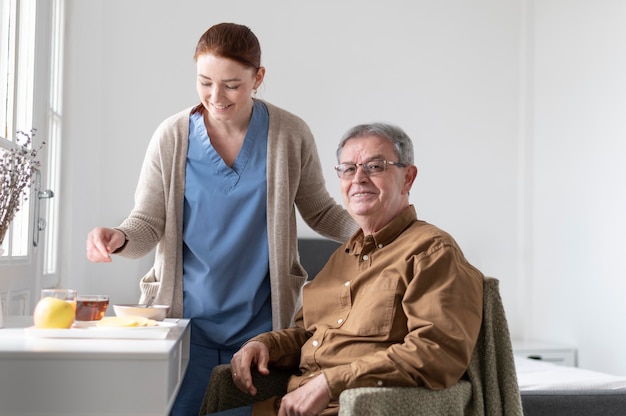
Photo by Freepik
If you’re comparing in-home care options designed for daily living in Atlanta GA, ask questions that reveal process—not promises.
- “What happens if the caregiver calls out last minute?”
- “How do you match caregiver personality and communication style?”
- “What does the first week look like, and how do we evaluate fit?”
- “How do updates work—who contacts the family, and how often?”
- “What do you do if my parent refuses help in the moment?”
Green flags
- Clear boundaries on what they do and don’t do
- A real backup plan, not vague reassurance
- Willingness to start with a trial week and measurable goals
Red flags
- Pressure to commit before an assessment
- No clear communication routine
- “We’ll figure it out” without describing how
Families who want daily-living support explained plainly and organized around real routines sometimes start their search with providers like Always Best Care.
Mini Case Story: Combining Two Kinds of Care
One Atlanta family expected home-based services to mean “someone will be here when we need it.” Instead, the first week brought two home health visits—skilled, calm, helpful. But the household still felt shaky because the real danger was hiding in the ordinary parts of the day.
Mornings were the problem: the unsteady walk to the bathroom, the shower tension, the skipped breakfast that made everything else wobblier. The family tried notes on the counter. Then the notes multiplied. The phone died twice. Sunday passed without restocking the pill case. A laundry basket migrated into the hallway and stayed there. Midweek brought a stumble—not serious, but enough to make everyone go quiet for a moment.
They kept home health care for clinical goals. Then they added home care for targeted coverage during mornings and early evenings. The trade-off was clear: cost limits shaped the hours, so full-day coverage wasn’t the plan. Instead, they bought stability where risk lived.
Two weeks later, the house still had flaws. But it held together. That was the win.
Conclusion
Home care and home health care can sound like the same thing until you live the difference. Home care keeps daily routines safe—bathing, meals, mobility support, supervision, and the small household resets that prevent accidents. Home health care provides skilled clinical services at home—nursing and therapy tied to a physician-led plan.
Start by asking what’s really happening in the house. Is the challenge recovery and medical monitoring? Or has simply getting through the day become unsteady? Sometimes one service is enough. Sometimes the best plan uses both—each doing its own job, without overlap and without gaps.
A safer morning beats last-minute fixes. Every time.

Photo by Freepik
FAQs
1) Can home care and home health care happen at the same time?
Yes. Home health care can handle clinical goals while home care supports daily routines and safety during the hours that tend to break down.
2) Does home health care mean someone stays in the home all day?
Usually not. Home health care is often delivered as scheduled visits tied to a treatment plan, not continuous presence.
3) How can we tell quickly which one fits our situation?
If the issue is daily living and safety (bathing, meals, toileting, being alone), start with home care. If the issue is clinical treatment (wounds, therapy, medical monitoring), start with home health care.
4) How many home care hours should we start with?
Begin with the riskiest time windows—often morning and evening—run a short trial, track what improves, and adjust based on patterns instead of guesswork.
5) What should we ask a provider before committing?
Ask about backup coverage, communication routines, how caregiver fit is determined, how refusal is handled respectfully, and how a trial week is evaluated with measurable goals.