Without and Within: Victorian Mourning and Treatment of the DeadMain MenuFleeing Death: Victorian Paranoia Concerning Public HealthFirst SectionDying Well and Loved: At the Moment of Death and MourningSecond SectionWearing and Burying Death: Fashion, Mourning, and Public Displays of DeathThird SectionUp and Down the Stair with Burke and Hare: Body-SnatchingFourth SectionWeird Science: Anatomical Use of the DeadFifth SectionWorks Cited/Full-Texts/Further ReadingsKyle Brett425ed005fc457ac8e436783036f285b42b192fb4
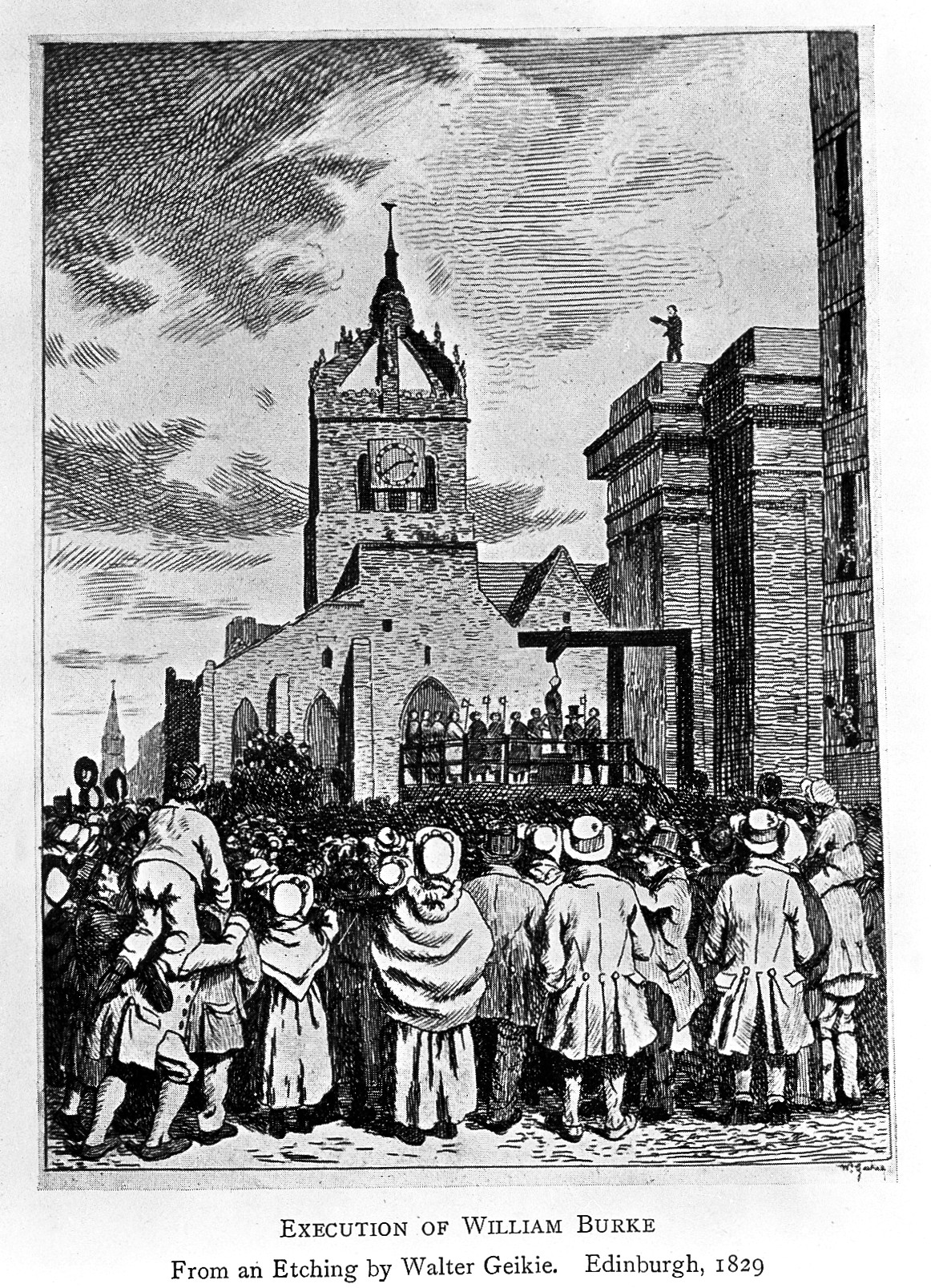
Execution of William Burke
12016-12-12T09:43:55+00:00Kyle Brett425ed005fc457ac8e436783036f285b42b192fb4581Execution of William Burke who murdered the poor, lost and lame of Edinburgh and then supplied their bodies to anatomists for dissection.plain2016-12-12T09:43:55+00:00Kyle Brett425ed005fc457ac8e436783036f285b42b192fb4
12016-12-11T19:00:18+00:00Kyle Brett425ed005fc457ac8e436783036f285b42b192fb4Burke and HareKyle Brett2Topic-specificplain2016-12-12T09:47:58+00:00Kyle Brett425ed005fc457ac8e436783036f285b42b192fb4
This page is referenced by:
12016-11-26T15:14:30+00:00Up and Down the Stair with Burke and Hare: Body-Snatching16Fourth Sectionplain19552016-12-13T15:15:24+00:00After completing our turn away from the dead, we return in morbid force to the scandal surrounding a type of resurrection: body-snatching. In this chapter we focus on the abuses of the dead for profit, focusing on the murder and selling of bodies to forward medical science. Here we use the highly popular narrative surrounding the murder-selling duo, Burke and Hare. I am linking such narratives to the need for the dead to be used, worn, or altered for the benefit of the living (here in economic and not scientific) terms. No longer are the dead tied to a living subject, but rather are pure economic utility. Within this section, the line between life and dead, utility and subject, begins to blur as we follow the Resurrectionists to the grave of the freshly deposited bodies.
In the first section, we lay the historical groundwork of this section by focusing on common narratives surrounding the body-snatching profession. Here we begin with an historical overview from the beginning of the century that outlines the public outcry to learn about and hopefully expose the body-snatchers. We then turn to a brief poem that curiously brings the dead to our attention—using their metaphorical position to highlight social ills. We then begin to wade into the depths of the gravely crafted argument surrounding the ethics of using the dead for science and other abuses. Finally, we hear the other side of the cultural taboo, listening to late-century narrative about a Resurrectionist from the 1810s. This shows the sheer cultural weight invested in this grisly profession.
In the second section, we look more closely at the atypical and highly popularized narratives that surround Burke and Hare, a murdering duo who sold their victims to medical institutions for dissection. Here we take a temporal break and listen to a twenty-first century podcast about the myth surrounding Burke and Hare (current this year, 2016). We end this section with an overview of the court case and demise of both Burke and Hare, highlighting the legal ramifications of such abuse of the dead and paving the way for our final chapter.
For reading: You can either click any of the sub-sections presented on this page, or start with "Resurrectionists and Reclaiming the Dead" and follow the prescribed path to the end of this chapter.