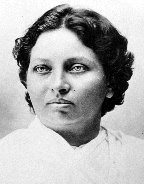
Rudyard Kipling Photograph
1 media/Rudyard_Kipling_(portrait)_thumb.jpg 2026-07-24T12:08:40+00:00 Amardeep Singh c185e79df2fca428277052b90841c4aba30044e1 184 1 Rudyard Kipling Photograph plain 2026-07-24T12:08:40+00:00 Amardeep Singh c185e79df2fca428277052b90841c4aba30044e1This page is referenced by:
-
1
2020-09-04T09:49:47+00:00
Literature of Colonial South Asia: A Digital Archive
57
British Raj Literature; Collection of Full Text Versions of South Asian and British fiction from the British Colonial Era (1850-1930)
plain
2026-08-15T17:52:14+00:00
This project is a collaboration between Amardeep Singh and Sana Asifriyaz.
Welcome! Here we have assembled a collection of works of literature by both Western and South Asian writers from the British colonial period. The focus of the collection is predominantly Anglophone works of literature -- fiction, poetry, and drama -- by authors between 1850 and about 1930, though there are some earlier materials as well as some post-1930 materials that are out of copyright. We are also including published translations from Indian languages, especially Bengali and Marathi. Some select nonfiction works are also included, especially when they were authored by writers who also wrote works of fiction and poetry.
A good place to start might be the chronological list of full-length books collected on this site.
Some of the topics we have been developing are:- Indian Writers in the West During the Colonial Period (1794-1947)
- South Asian Women Writers from the colonial era
- Fiction by Western Women in British India
- Writers associated with the Bengal Renaissance (and an overview of some key themes of the Bengal Renaissance)
- A collection of Rabindranath Tagore's short stories in translation
- Writers who responded to the 1857 Sepoy Rebellion (or Sepoy Mutiny)
- Writings dealing with interracial romance and the multiracial Anglo-Indian community
- Writers who described various famines of the British Raj
- Writers who described emerging social movements and anti-colonial politics
- Indian Revolutionaries in the U.S.: The Ghadar Party and the Young India Movement
- Detailed summaries of select texts collected on this site.
- Quantitative Approaches: Some Preliminary Comparisons of British and Indian Texts Using SpaCy and Stanza NER
The Google Drive version of this collection can be found here. You'll also find a metadata spreadsheet there with publication information. This project builds on earlier digital collections I have developed, including The Kiplings and India, and The Collected Poems of Henry Derozio.
1. What is in the Collection?
As mentioned above, British, American, and Canadian authors are included alongside South Asian writers in the present collection.
One reason to do this is that many of the writers were clearly in dialogue with one another; South Asian writers were clearly reading people like Rudyard Kipling, E.M. Forster, and Katherine Mayo. (For example, Dhan Gopal Mukerji, in Caste and Outcast, quotes directly from Kipling.) It's a little less clear which South Asian writers British and American writers were reading other than Rabindranath Tagore and Sarojini Naidu -- and this itself might be studied. The writer English Maud Diver, who published many novels set in India, rarely engaged with Indian authors early in her career, though she opens her 1921 novel Far To Seek with epigrams from Tagore. Forster, for his part, has Aziz and his friends reciting Urdu poetry by Mirza Ghalib and Iqbal
Publishing Houses: The publishing industries also overlapped to a considerable extent; while some South Asian writers published their works with publishers based in India, many aimed to publish with houses based in London. The Hogarth Press is particularly notable for publishing Ahmed Ali's Twilight in Delhi (1941) and G.S. Dutt's biography, A Woman of India (1929). It also published Edward Thompson's critique of one-sided accounts of the 1857 Sepoy Mutiny in The Other Side of the Medal. Quite a number of other Indian authors who published in the West used mainstream commercial publishing houses like Macmillan and Heinemann.
Moreover, the British Raj had its own English-language publishing houses based in India itself, such as Thacker, Spink, and Company and Stanhope Press. Thacker, Spink & Co. published some early volumes of Rudyard Kipling's. A.H. Wheeler's Indian Railway Library is another important publishing house; it started with several volumes by Kipling before expanding to a range of other authors. There was also an array of publishing houses publishing work in Indian languages. Thacker, Spink & Co. also published an English translation of Peary Chand Mitra's The Spoilt Child in 1893.
Points of Comparison: Historical Events, Comparative Geography. One possible line of inquiry with this material might be to try and compare fiction, poetry and drama by British, Irish, and North American authors with South Asian output in English. Such inquiry could either be historical and thematic (i.e., comparing the way British and South Asian writers reacted to historical events like the Sepoy Mutiny or the Famine of 1876), or it could be connected to matters of language and style. To do that it makes sense to have writers from different backgrounds represented in the Corpus. Another topic of interest might be the comparative geographies of the South Asian experience for the two communities of authors. What settings or locales tend to appear most often, either within the scope of any given town or city, or with respect to the Indian subcontinent as a whole? Do Western writers in India describe a range of locations that is broader than those described by writers who were South Asian?
North American writers. There was also a fair amount of interest in colonial India in the U.S. and Canada at the time -- from the appreciation of Kipling to the American feminist fascination with Pandita Ramabai. In the 1920s, a major figure might be Katherine Mayo, whose scathing book Mother India provoked a considerable outcry from many Indian writers shortly after it was published. Readers may be less familiar with the pulpy Indian adventure novels by an American writer named Talbot Mundy. Perhaps the writer of greatest interest to scholars today might be the Canadian writer Sara Jeannette Duncan (several of her works are in our collection here).
In the metadata file, we list the nationalities of the authors. Besides the North Americans in the collection, I would draw readers' attention to B.M. Croker--an Irish woman who lived in India and wrote many Romance novels based in colonial India.
In addition to the nationality question, with South Asian writers who moved abroad there is also the question of destination. Cornelia Sorabji (who eventually moved to England) is of course pretty well known. Dhan Gopal Mukerji, who moved to the U.S. in the 1910s, is mainly known for his memoir Caste and Outcast, but he was quite a prolific literary writer, with several books of poetry and fiction that are worth looking at. See our page collecting writings by Indians who traveled in the West.
2. Translations.
We decided to include translations by South Asian writers like Bankim Chandra Chatterjee (Chattopadhyay) and Rabindranath Tagore (Thakur) in the Corpus where we could find editions that were out of copyright (see the list of texts on the Bengal Renaissance page). Tagore of course needs no explanation; he was one of the few South Asian writers to break through and achieve global acclaim in the early 20th century. Bankim Chandra Chatterjee (here, I'm using the Anglicized spelling most commonly used at the time in English) is slightly different. He is clearly historically important for Anandamath (here included in translation as Dawn Over India) and Rajmohan's Wife (thought to be the first English-language novel by an Indian author), but it seemed like it might be valuable to include some other of his Bengali novels in translation here. See our Bengal Renaissance page for more. Several of these translations are available from Wikisource.
Alongside translations by South Asian writers, there are a few translations in the corpus of historical South Asians texts by British writers.
3. Fiction and Nonfiction
Right now there is a limited amount of nonfiction included in the corpus. This was a tough decision, as there is a vast array of nonfiction colonial travel writing based in South Asia from this period. We have excluded most of that sort of writing for now.
However, we are including some nonfiction, mostly texts by literary authors who wrote occasional works of nonfiction (Dhan Gopal Mukerji's Caste and Outcast is included, as is Tagore's My Reminiscences). We have also included a plain text file of Pandita Ramabai's The High-Caste Hindu Woman, mainly because it seems like an important text that might be useful for researchers in this field. Another important nonfiction text might be Edward Thompson's The Other Side of the Medal. Any queries specifically structured around the stylistics of fiction or other quantitative textual analyses might want to exclude these nonfiction texts.
4. Derivation; proofreading work
The texts included here have been pulled together materials from different repositories to assemble this corpus. Here, the lion's share of material comes from Project Gutenberg and HathiTrust. The Gutenberg materials were in good shape; they've generally been proofread and formatted cleanly. The HathiTrust materials have required much more work. One can extract HathiTrust texts by requesting plain text, but these OCR page scans need quite a bit of processing to make them clean enough to use. A lot of the grunt work of assembling this collection has entailed doing that processing.
A number of the texts on this site have also been derived from The Veranda, an excellent collection of texts by mainly Western authors who wrote about India under British colonial rule. We are grateful to the editor of that project, Janusz Buda, for permission to use his formatted and proofread versions here.
- Chronological List Of Full-Length Texts On This Site
- South Asian Women Writers
- Writers of the Bengal Renaissance: an Overview
- Rabindranath Tagore's Short Stories (a collection)
- Fiction by Western Women in Colonial India
- Literature of the 1857 Mutiny / 1857 Rebellion
- Indian Travel Writers in the West: the Colonial Period (1794-1947)
- Interracial Romance and Multi-racial Anglo-Indian Community
- Emerging Social Movements and Nationalist Politics
- Representations of Illness and Famine
- Detailed Summaries of Texts on this Site
- Tag Cloud and Network Visualization
- Quantitative Approaches
-
1
2026-07-03T12:32:05+00:00
Rudyard Kipling (1865-1936): Author Profile
5
Profile of author Rudyard Kipling
plain
2026-07-29T10:53:24+00:00
Joseph Rudyard Kipling (1865-1936) was a prolific writer and journalist who wrote extensively about India. He was born in Bombay in 1865, and sent to England to study at age five, away from his parents. He returned to India in 1882, and lived with his family at Lahore for several years. There he began working as a reporter for the Lahore-based newspaper, the Civil & Military Gazette. He also began writing and publishing poems and stories, at first collaboratively with other family members (especially his sister, Alice), and then eventually under his own independent signature. Between 1886 and 1888, Rudyard Kipling published a large number of short stories and poems related to Anglo-Indian life, many of them in collections like Plain Tales from the Hills and Soldiers Three; quite a number of these were also published in stand-alone form in Indian newspapers. Kipling left India in 1889, but continued to write about India while living first in the United States and then in England. Several books published over the course of the next decade, including The Jungle Book and Kim, would become extremely influential depictions of everyday life in India during the British Raj.
Early publications: Rudyard Kipling gained experience as a writer working for the Civil & Military Gazette, a local English-language newspaper based in Lahore, which was oriented to the local Anglo-Indian community there. His experiences there, and later with an Allahabad newspaper, also gave him opportunities to travel around India and learn about its different regions and cultures.It also gave him venues where he could publish his early poems and short stories, whether in individual form or in early editions that were actually printed on the printing press at the newspaper. (Rudyard and his sister co-wrote Echoes, which was printed this way. The first edition of Departmental Ditties was also printed on the C&MG printing press.)
Rudyard Kipling's early output consisted of a number of poems describing and documenting Anglo-Indian life (Departmental Ditties, 1886) and soon after, short stories that aimed to do something similar. These stories and poems often used or invoked Hindustani words and place-names ("Shall I meet you next season at Simla, oh sweetest and best of your kind?"), though they rarely engaged with the actual voices of Indian people.
Rudyard Kipling's first collection of short stories is Plain Tales from the Hills. Today, Plain Tales from the Hills is best known as a collection of stories by Rudyard Kipling, published in 1888. However, before Rudyard published forty stories as Plain Tales From the Hills under his own signature, he and Alice Kipling published the stories without signature in the Civil & Military Gazette in the fall of 1886 and throughout 1887. The collaboration followed a series of successful collaborations between brother and sister, on Echoes (1884) and Quartette (1885).
Formative experiences: Considering the impact of his Anglo-Indian writings, it is worth noting that Rudyard Kipling did not live in India for very long as an adult -- really just about seven years (1882-1889). In terms of knowledge of the country and its cultures, he did benefit considerably from the longer experience of his father, John Lockwood Kipling, who had lived in India for more than twenty years. One formative experience for Rudyard Kipling might be the February 1883 Ilbert Bill, introduced by liberal reforming Viceroy Lord Ripon. The Ilbert Bill would have given Indian judges the right to pass judgment over white Englishmen. However, the Anglo-Indian community was outraged at this modest reform to empower highly qualified Indians in the judicial system, and the Bill would subsequently be withdrawn. While his editor at the Civil and Military Gazette, Stephen Wheeler, initially wrote an editorial praising the reforms, biographer Charles Allen indicates that Rudyard Kipling saw the intense racial feeling among the broader Anglo-Indian community. Subsequently he would also be a "Tory" with respect to Empire -- an advocate for a strict racial hierarchy within the colonial system. Rudyard Kipling's first published poem, "A New Departure," published in the Civil and Military Gazette on March 29, 1883, was a response to the Ilbert Bill.
Themes to look for:- Opium dens and the underside of Lahore: "The Gate of a Hundred Sorrows" (CMG, September 26, 1884; also published in Plain Tales from the Hills).
- Stories with actual Indian characters: A good example might be "In the House of Suddhoo" (CMG, April 30, 1886), which deals with an elderly Englishman who rents out rooms in his house to Indians. The core of the story involves an Indian magician who tricks a poor Indian woman, who may also be a prostitute.
- Interracial romance. This is actually quite rare in Kipling's works. One story that does address it might be "Lispeth" (first published in CMG in November 1886), which involves an Indian woman in a remote hill station, who falls in love with an Englishman. Another example is "Without Benefit of Clergy." Interracial romance is also hinted at in "Kidnapped," though in a rather facetious way.
- Disease epidemics and cholera. This is a common theme in early Kipling short stories. An example might be "The City of Dreadful Night" (CMG, September 10, 1885), where the narrator visits the city of Lahore at night, and observes piles of corpses, and observe thousands of people sleeping on rooftops in the city (a common practice in hot summer months). As he returns home at dawn, he notes a woman's corpse being taken to the ghats for cremation. Also, a short story from Plain Tales From the Hills that deals with cholera might be "Thrown Away"; there a young Englishman in a remote station in colonial India dies by suicide, but the death is ascribed to cholera to protect his reputation.
Writings by Rudyard Kipling:
Echoes (1884; collaborative volume with 32 poems by Rudyard Kipling)
Quartette (1885; collaborative volume with numerous contributions from Rudyard Kipling)
Departmental Ditties (1886; poetry)
Plain Tales from the Hills (1887; collaborative volume with short stories by Rudyard Kipling and Alice Kipling)
Soldiers Three (1888; A.J. Wheeler's Railway Series)
In Black and White (1888; A.J. Wheeler's Railway Series)
Naulahka, A Story of East and West (1892; co-written with Wolcott Balestier)
The Jungle Book (1894)
Kim (1901)
.jpg)