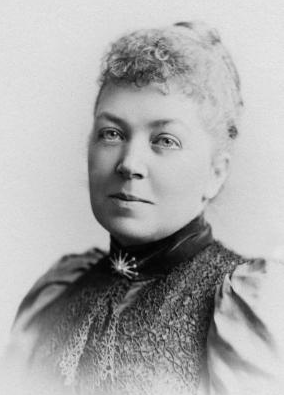
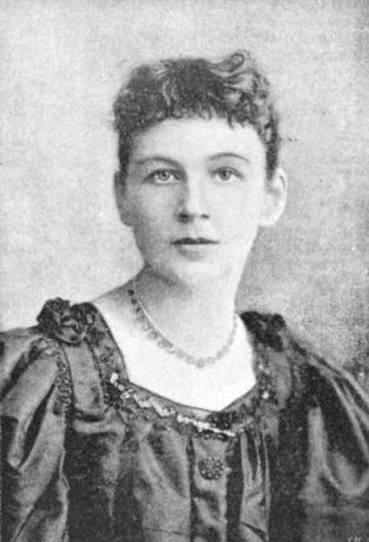
B.M. Croker Photograph
1 media/B-M-Croker-Orlando-07-24-2026_08_29_AM_thumb.png 2026-07-24T12:30:16+00:00 Amardeep Singh c185e79df2fca428277052b90841c4aba30044e1 184 1 B.M. Croker Photograph plain 2026-07-24T12:30:16+00:00 Amardeep Singh c185e79df2fca428277052b90841c4aba30044e1This page is referenced by:
-
1
2026-07-09T11:40:50+00:00
Fiction by Western Women in Colonial India
29
Overview and links to Fiction by Western Women in British India
plain
2026-07-31T15:24:09+00:00
The text on this page was written by Sana Asifriyaz, July 2026.
There were several prominent Western women who penned works of fiction about colonial India. Among them were B.M. Croker, an Irish author who wrote many novels set in India, including Diana Barrington: A Romance of Central India (1888) and Her Own People (1905); Sara Jeannette Duncan, a Canadian author and journalist who wrote both novels and collections of short stories, such as The Pool in the Desert (1903) and The Simple Adventures of a Memsahib; and Flora Annie Steel, an Englishman who lived in India for a number of years and authored the well-known Mutiny novel On the Face of the Waters (1896). She is also the author of The Potter's Thumb (1900), as well as domestic guides for British women living in Indian households. Another prominent voice -- inspired by B.M. Croker -- was F.E. Penny, who published many novels set in India, including A Mixed Marriage and Caste and Creed.
Many works by Western women fiction writers could be grouped in the romance genre. And many of these texts explored interracial romance. (See our topic page on interracial romance and the mixed-race Anglo-Indian community here.) Maud Diver’s Lilamani (1911), which follows the romance between an Indian woman and an English baronet, is one of many such examples.
However, just as it is safe to say that not all Western women authors wrote romance fiction, some of those who included romantic elements in their work produced fiction that could hardly be considered romance solely. Sara Jeannette Duncan’s The Pool in the Desert, for instance, which includes short stories centering on romantic plots, is one of her many works that can be more substantially characterized by a “New Woman” style, which explores the emerging archetype of the independent woman, changing gender roles, and alternatives to the heteronormative marriage plot.
The New Woman style perhaps speaks to the difficulties women writers overcame in order to publish their work. Valerie Sander’s essay “Woman, Fiction and the Marketplace” in Joanne Shattock’s Women and Literature in Britain 1800-1900 (2001) observes the challenges women writers faced in literary careers, which were formidably male-dominated spaces. Joyce Kay’s 2007 essay “‘No Time for Recreations Till the Vote is Won’? Suffrage Activists and Leisure in Edwardian Britain” discusses women writers like Flora Annie Steel who joined women-only professional writing groups, which later became spaces for women to champion not only women’s literary careers but also women’s suffrage.
Finally, Julia Keuhn's chapter "Desire, Love and Mixed-Race Children: Plotting Anglo-Indian Popular Fiction" in her book A Female Poetics of Empire: From Eliot to Woolf (2013) has an in-depth treatment of Anglo-Indian domestic novels written by such authors as B.M. Croker and Alice Eustace.
Here is a selection of texts by Western women who wrote fiction set in British India:
Maud Diver, Lilamani
Maud Diver, Captain Desmond, V.C.
Maud Diver, The Great Amulet
Detailed Summary of The Great Amulet
Maud Diver, Far to Seek: A Romance of England and India
Detailed Summary of Far to Seek
Sara Jeannette Duncan, The Pool in the Desert
Detailed summary of "A Mother in India"
Sara Jeannette Duncan, The Simple Adventures of a Memsahib
Detailed Summary of The Simple Adventures of a Memsahib
Sara Jeannette Duncan, The Story of Sunny Sahib
Detailed Summary of The Story of Sunny Sahib
Sara Jeannette Duncan, Hilda: A Story of Calcutta
Detailed Summary of Hilda: A Story of Calcutta
Sara Jeannette Duncan, His Honour and a Lady (1896)
Detailed summary of His Honour and a Lady
B.M. Croker, Diana Barrington: A Romance of Central India
Detailed Summary of Diana Barrington
B.M. Croker, A Family Likeness: A Sketch in the Himalayas
Detailed summary of A Family Likeness
B. M. Croker, The Company's Servant: A Romance of Southern India
Detailed summary of The Company's Servant
B.M. Croker, Her Own People
Detailed summary of Her Own People
Flora Annie Steel, On the Face of the Waters
A good account of this novel at Wikipedia
Flora Annie Steel, The Potter's Thumb
Detailed Summary of The Potter's Thumb
Alice Elizabeth Dracott, Simla Village Tales, Or, Folk Tales from the Himalayas
Alice Eustace, A Girl from the Jungle
Alice MacDonald Fleming, A Pinchbeck Goddess (at The Kiplings and India)
Maxwell Gray, In the Heart of the Storm
F.E. Penny, Caste and Creed
F.E. Penny, Romance of a Nautch Girl (1898)
Detailed Summary of Romance of a Nautch Girl
F.E. Penny, A Mixed Marriage
Detailed Summary of A Mixed Marriage
F.E. Penny, The Outcaste
Detailed Summary of The Outcaste
F.E. Penny, The Sanyasi (1904)
Detailed Summary of The Sanyasi
Alice Perrin, East of Suez
Detailed Summaries of the stories in "East of Suez"
Alice Perrin, The Anglo-Indians
Detailed summary of The Anglo-Indians
Alice Perrin, Woman in the Bazaar
Alice Perrin, Star of India -
1
2026-07-09T12:00:52+00:00
B.M. Croker (1847-1920): Author Profile
5
Author profile for Bithia Mary Croker, Irish novelist who lived in and wrote about India
plain
2026-07-24T12:30:38+00:00
This Author Profile was written by Sana Asifriyaz, July 2026.
Biography
Bithia Mary Croker (née Sheppard, 1847-1920) was an Irish writer of novels and short stories, many of which are set in British India. Croker was born in Northern Ireland to a family belonging to the Anglican Church of Ireland. She was educated in England as well as France and was an accomplished horseback rider. Croker married John Stokes Croker, an officer in the British army, in Ireland in 1871. She and her husband eventually moved from Ireland to India where she gave birth to and baptized their daughter Gertrude Eileen who was educated in England. Croker lived in India for fourteen years and wrote much of her oeuvre there. Upon her husband John’s retirement, Croker and John moved back to Ireland. Her husband died in Kent, England in 1911 and she died nearly a decade afterward in London in 1920.
Publications
Between 1882 and her death in 1920, Croker wrote 42 novels and 7 short story collections. Her debut novel and its successors saw remarkable success, earning public praise and reprints. Interestingly, her first novel Proper Pride (1882), a historical romance following the emotionally fraught marriage of Alice and her officer husband Sir Reginald who is deployed in India and leaves Alice feeling isolated in England, was published anonymously and was thought to be written by a man, possibly due to its faithful portrayal of the male protagonist’s complex character.
In addition to romance, Croker explores other genres in her works. She wrote a number of ghost stories, including “To Let” (1893). One of her short stories, “The Little Brass God (1905), is a gothic fictional text starring a statue of the Hindu goddess Kali, which curses anyone in possession of it. This story echoes the plot of Wilkie Collins’s The Moonstone (1868), the first detective novel, which also includes Gothic elements as it follows the story of a fictional Indian diamond, belonging to a Hindu temple, that brings misfortune upon its possessors. Croker’s Diana Barrington: A Romance of Central India (1888) is a novel that involves the theme of cursed exoticized Indian materials. In this narrative, the titular protagonist’s father gifts her the "Begum’s Necklace," which is said to possess the "Evil Eye"; indeed, disaster–manipulation, misunderstanding, and more–ensues in Diana’s life when the necklace enters it. And, finally, Croker’s last novel, The House of Rest (1921), which was published posthumously, is set in India and blends romance, adventure, and mystery.
Shuchi Kapila’s chapter on Croker in Educating Seeta: The Anglo-Indian Family Romance and the Poetics of Indirect Rule (2010) is a critical study of Croker’s works.
Contents
Proper Pride (1882)
Diana Barrington: A Romance of Central India (1888)
Diana Barrington: Detailed Summary
To Let (1893)
“The Little Brass God" (1905)
Her Own People (1905)
A Rolling Stone (1911)
The House of Rest (1921)