Haldhar Nag (1950- ): Author Profile
1 2025-06-16T11:31:06+00:00 Amardeep Singh c185e79df2fca428277052b90841c4aba30044e1 283 6 Profile of Odisha / Sambalpuri writer Haldhar Nag plain 2025-08-06T13:33:20+00:00 Srishti Raj 63847146fe050a2149dca5f3da2bdd3708df3f40Page
| resource | rdf:resource | https://scalar.lehigh.edu/adivasi-writers-indias-indigenous-literary-tradition/haldhar-nag-1950--author-profile |
| type | rdf:type | http://scalar.usc.edu/2012/01/scalar-ns#Composite |
| is live | scalar:isLive | 1 |
| was attributed to | prov:wasAttributedTo | https://scalar.lehigh.edu/adivasi-writers-indias-indigenous-literary-tradition/users/48 |
| created | dcterms:created | 2025-06-16T11:31:06+00:00 |
Version 6
| resource | rdf:resource | https://scalar.lehigh.edu/adivasi-writers-indias-indigenous-literary-tradition/haldhar-nag-1950--author-profile.6 |
| versionnumber | ov:versionnumber | 6 |
| title | dcterms:title | Haldhar Nag (1950- ): Author Profile |
| description | dcterms:description | Profile of Odisha / Sambalpuri writer Haldhar Nag |
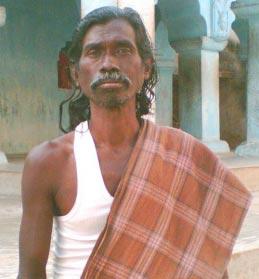
| content | sioc:content | Haldhar Nag was born in a small village in Odisha in 1950. He writes in the Kosali language, sometimes referred to as Kosali-Sambalpuri or just Sambalpuri (for more on the complexity of naming the poet's language, see this Wikipedia page). His poetry has been translated into many languages, including Hindi, English, Kannada, Tamil, and Bengali. In 2016, he was awarded the Padma Shri prize by the Indian government; in 2019, Haldhar Nag was awarded an honorary doctorate in literature by Sambalpur University. Nag is often described as a traditional oral poet; many of his compositions are long, ballad-style poems on mythological themes. That said, his tellings feature his own, sometimes idiosyncratic interpretation of Hindu mythological classics; his poem "The Great Sati Urmila," for instance, is understood to be a retelling of The Ramayana from Urmila's point of view. However, he also has many poems that engage with questions of modernity, the displacement of Adivasi people from their traditional lands, and the crisis in Indian agriculture. We have been reading Haldhar Nag's poetry in English translation, in a volume translated by Surendra Nath, Haldhar Nag: Selected Poems (Black Eagle Books, 2020). There is also a more complete, extensive compilation of translated versions of Nag's poetry in Kavyanjali. Poems that stand out for their environmental themes include, "Regard for Soil," "Warning," and "Swacch Bharat." |
| default view | scalar:defaultView | plain |
| was attributed to | prov:wasAttributedTo | https://scalar.lehigh.edu/adivasi-writers-indias-indigenous-literary-tradition/users/278 |
| created | dcterms:created | 2025-08-06T13:33:20+00:00 |
| type | rdf:type | http://scalar.usc.edu/2012/01/scalar-ns#Version |
Version 5
| resource | rdf:resource | https://scalar.lehigh.edu/adivasi-writers-indias-indigenous-literary-tradition/haldhar-nag-1950--author-profile.5 |
| versionnumber | ov:versionnumber | 5 |
| title | dcterms:title | Haldhar Nag (1950- ): Author Profile |
| description | dcterms:description | Profile of Odisha / Sambalpuri writer Haldhar Nag |
| content | sioc:content | Haldhar Nag was born in a small village in Odisha in 1950. He writes in the Kosali language, sometimes referred to as Kosali-Sambalpuri or just Sambalpuri (for more on the complexity of naming the poet's language, see this Wikipedia page). His poetry has been translated into many languages, including Hindi, English, Kannada, Tamil, and Bengali. In 2016, he was awarded the Padma Shri prize by the Indian government; in 2019, Haldhar Nag was awarded an honorary doctorate in literature by Sambalpur University. Nag is often described as a traditional oral poet; many of his compositions are long, ballad-style poems on mythological themes. That said, his tellings feature his own, sometimes idiosyncratic interpretation of Hindu mythological classics; his poem "The Great Sati Urmila," for instance, is understood to be a retelling of The Ramayana from Urmila's point of view. However, he also has many poems that engage with questions of modernity, the displacement of Adivasi people from their traditional lands, and the crisis in Indian agriculture. We have been reading Haldhar Nag's poetry in English translation, in a volume translated by Surendra Nath, Haldhar Nag: Selected Poems (Black Eagle Books, 2020). There is also a more complete, extensive compilation of translated versions of Nag's poetry in Kavyanjali. Poems that stand out for their environmental themes include, "Regard for Soil," "Warning," and "Swacch Bharat." |
| default view | scalar:defaultView | plain |
| was attributed to | prov:wasAttributedTo | https://scalar.lehigh.edu/adivasi-writers-indias-indigenous-literary-tradition/users/278 |
| created | dcterms:created | 2025-08-06T13:33:18+00:00 |
| type | rdf:type | http://scalar.usc.edu/2012/01/scalar-ns#Version |
Version 4
| resource | rdf:resource | https://scalar.lehigh.edu/adivasi-writers-indias-indigenous-literary-tradition/haldhar-nag-1950--author-profile.4 |
| versionnumber | ov:versionnumber | 4 |
| title | dcterms:title | Haldhar Nag (1950-) Author Profile |
| description | dcterms:description | Profile of Odisha / Sambalpuri writer Haldhar Nag |
| content | sioc:content | Haldhar Nag was born in a small village in Odisha in 1950. He writes in the Kosali language, sometimes referred to as Kosali-Sambalpuri or just Sambalpuri (for more on the complexity of naming the poet's language, see this Wikipedia page). His poetry has been translated into many languages, including Hindi, English, Kannada, Tamil, and Bengali. In 2016, he was awarded the Padma Shri prize by the Indian government; in 2019, Haldhar Nag was awarded an honorary doctorate in literature by Sambalpur University. Nag is often described as a traditional oral poet; many of his compositions are long, ballad-style poems on mythological themes. That said, his tellings feature his own, sometimes idiosyncratic interpretation of Hindu mythological classics; his poem "The Great Sati Urmila," for instance, is understood to be a retelling of The Ramayana from Urmila's point of view. However, he also has many poems that engage with questions of modernity, the displacement of Adivasi people from their traditional lands, and the crisis in Indian agriculture. We have been reading Haldhar Nag's poetry in English translation, in a volume translated by Surendra Nath, Haldhar Nag: Selected Poems (Black Eagle Books, 2020). There is also a more complete, extensive compilation of translated versions of Nag's poetry in Kavyanjali. Poems that stand out for their environmental themes include, "Regard for Soil," "Warning," and "Swacch Bharat." |
| default view | scalar:defaultView | plain |
| was attributed to | prov:wasAttributedTo | https://scalar.lehigh.edu/adivasi-writers-indias-indigenous-literary-tradition/users/48 |
| created | dcterms:created | 2025-06-20T07:34:54+00:00 |
| type | rdf:type | http://scalar.usc.edu/2012/01/scalar-ns#Version |
Version 3
| resource | rdf:resource | https://scalar.lehigh.edu/adivasi-writers-indias-indigenous-literary-tradition/haldhar-nag-1950--author-profile.3 |
| versionnumber | ov:versionnumber | 3 |
| title | dcterms:title | Haldhar Nag (1950-) (Author Profile) |
| description | dcterms:description | Profile of Odisha / Sambalpuri writer Haldhar Nag |
| content | sioc:content | Haldhar Nag was born in a small village in Odisha in 1950. He writes in the Kosali language, sometimes referred to as Kosali-Sambalpuri or just Sambalpuri (for more on the complexity of naming the poet's language, see this Wikipedia page). His poetry has been translated into many languages, including Hindi, English, Kannada, Tamil, and Bengali. In 2016, he was awarded the Padma Shri prize by the Indian government; in 2019, Haldhar Nag was awarded an honorary doctorate in literature by Sambalpur University. Nag is often described as a traditional oral poet; many of his compositions are long, ballad-style poems on mythological themes. That said, his tellings feature his own, sometimes idiosyncratic interpretation of Hindu mythological classics; his poem "The Great Sati Urmila," for instance, is understood to be a retelling of The Ramayana from Urmila's point of view. However, he also has many poems that engage with questions of modernity, the displacement of Adivasi people from their traditional lands, and the crisis in Indian agriculture. We have been reading Haldhar Nag's poetry in English translation, in a volume translated by Surendra Nath, Haldhar Nag: Selected Poems (Black Eagle Books, 2020). There is also a more complete, extensive compilation of translated versions of Nag's poetry in Kavyanjali. Poems that stand out for their environmental themes include, "Regard for Soil," "Warning," and "Swacch Bharat." |
| default view | scalar:defaultView | plain |
| was attributed to | prov:wasAttributedTo | https://scalar.lehigh.edu/adivasi-writers-indias-indigenous-literary-tradition/users/48 |
| created | dcterms:created | 2025-06-16T13:40:18+00:00 |
| type | rdf:type | http://scalar.usc.edu/2012/01/scalar-ns#Version |
Version 2
| resource | rdf:resource | https://scalar.lehigh.edu/adivasi-writers-indias-indigenous-literary-tradition/haldhar-nag-1950--author-profile.2 |
| versionnumber | ov:versionnumber | 2 |
| title | dcterms:title | Haldhar Nag (1950-) (Author Profile) |
| description | dcterms:description | Profile of Odisha / Sambalpuri writer Haldhar Nag |
| content | sioc:content | Haldhar Nag was born in a small village in Odisha in 1950. He writes in the Kosali language, sometimes referred to as Kosali-Sambalpuri or just Sambalpuri (for more on the complexity of naming the poet's language, see this Wikipedia page). His poetry has been translated into many languages, including Hindi, English, Kannada, Tamil, and Bengali. In 2016, he was awarded the Padma Shri prize by the Indian government; in 2019, Haldhar Nag was awarded an honorary doctorate in literature by Sambalpur University. Nag is often described as a traditional oral poet; many of his compositions are long, ballad-style poems on mythological themes. That said, his tellings feature his own, sometimes idiosyncratic interpretation of Hindu mythological classics; his poem "The Great Sati Urmila," for instance, is understood to be a retelling of The Ramayana from Urmila's point of view. However, he also has many poems that engage with questions of modernity, the displacement of Adivasi people from their traditional lands, and the crisis in Indian agriculture. We have been reading Haldhar Nag's poetry in English translation, in a volume translated by Surendra Nath, Haldhar Nag: Selected Poems (Black Eagle Books, 2020). There is also a more complete, extensive compilation of translated versions of Nag's poetry in Kavyanjali. Poems that stand out for their environmental themes include, "Regard for Soil," "Warning," and "Swacch Bharat." |
| default view | scalar:defaultView | plain |
| was attributed to | prov:wasAttributedTo | https://scalar.lehigh.edu/adivasi-writers-indias-indigenous-literary-tradition/users/48 |
| created | dcterms:created | 2025-06-16T11:40:33+00:00 |
| type | rdf:type | http://scalar.usc.edu/2012/01/scalar-ns#Version |
Version 1
| resource | rdf:resource | https://scalar.lehigh.edu/adivasi-writers-indias-indigenous-literary-tradition/haldhar-nag-1950--author-profile.1 |
| versionnumber | ov:versionnumber | 1 |
| title | dcterms:title | Haldhar Nag (1950-) (Author Profile) |
| description | dcterms:description | Profile of Odisha / Sambalpuri writer Haldhar Nag |
| content | sioc:content | Haldhar Nag was born in a small village in Odisha in 1950. He writes in the Kosali language, sometimes referred to as Kosali-Sambalpuri or just Sambalpuri (for more on the complexity of naming the poet's language, see this Wikipedia page). His poetry has been translated into many languages, including Hindi, English, Kannada, Tamil, and Bengali. In 2016, he was awarded the Padma Shri prize by the Indian government; in 2019, Haldhar Nag was awarded an honorary doctorate in literature by Sambalpur University. Nag is often described as a traditional oral poet; many of his compositions are long, ballad-style poems on mythological themes. That said, his tellings feature his own, sometimes idiosyncratic interpretation of Hindu mythological classics; his poem "The Great Sati Urmila," for instance, is understood to be a retelling of The Ramayana from Urmila's point of view. However, he also has many poems that engage with questions of modernity, the displacement of Adivasi people from their traditional lands, and the crisis in Indian agriculture. We have been reading Haldhar Nag's poetry in English translation, in a volume translated by Surendra Nath, Haldhar Nag: Selected Poems (Black Eagle Books, 2020). There is also a more complete, extensive compilation of translated versions of Nag's poetry in Kavyanjali. Poems that stand out for their environmental themes include, "Regard for Soil," "Warning," and "Swacch Bharat." |
| default view | scalar:defaultView | plain |
| was attributed to | prov:wasAttributedTo | https://scalar.lehigh.edu/adivasi-writers-indias-indigenous-literary-tradition/users/48 |
| created | dcterms:created | 2025-06-16T11:31:06+00:00 |
| type | rdf:type | http://scalar.usc.edu/2012/01/scalar-ns#Version |