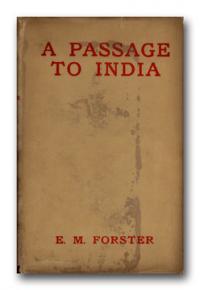
E.M. Forster's "A Passage to India": Digital Edition
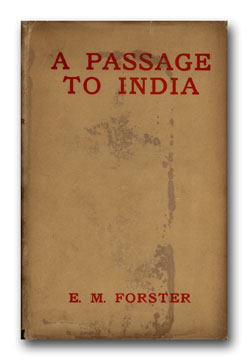
This is a free digital edition of E.M. Forster's A Passage to India. To begin reading, scroll down or go directly to Chapter 1.
A Passage to India, first published in 1924, is one of the most influential novels ever written about life in India under British colonialism. It shows both the British and Indian perspectives on the British presence, and the damage done by race and racism to the prospect of real cross-cultural encounter. Upon its publication the novel was an immediate success, winning prizes for Forster including the James Tait Memorial Prize for fiction (in 1924). It remains widely taught in classrooms and discussed by literary critics.A 1984 film adaptation by David Lean was also a critical success, and earned two Academy Awards.
The novel's title comes from the "Passage to India" section of Whitman's Leaves of Grass (which can be accessed at the Walt Whitman Archive here). Whitman's poem concerns a spiritual journey and ambitious themes related to technology and progress; for Whitman, the British presence in India represents a technologically-driven marvel of modernity. In contrast to the vastness of Whitman, Forster's novel is much more concerned with demystifying grand mythologies about the relationship of "East" and "West." The novel gives a highly realistic account of both the British and Indian perspectives on the British presence in India, hinting that the two communities could in fact be compatible but for the power imbalance. If Rudyard Kipling once wrote, cynically, that "East is East and West is West and never the twain shall meet," in Forster's conception of India East and West can and do meet, though they will likely continue to struggle to find true friendship or intimacy under British colonial rule.
Indian readers have certainly been highly conscious of A Passage to India – some love it, while others have problems with the way Forster represents Indian culture and society -- characters like Godbole, the Nawab Bahadur, and Aziz both can be seen as caricatures of certain Indian 'types'. What isn’t debated is how seriously Forster took the problem of race and racism in India under the British colonial government (or the “British Raj” as it is sometimes described). Unlike Joseph Conrad, for whom Africa is often just a background for European characters, Forster focuses directly on the problem of relations between Indians and the British in India. The central crisis in the first half of the novel concerns an accusation of sexual assault on the part of an Indian man against a British woman; the deep biases that are revealed with respect to assumptions about guilt and innocence show how imperfect the justice system was under British rule.
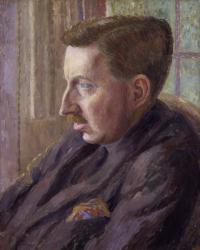
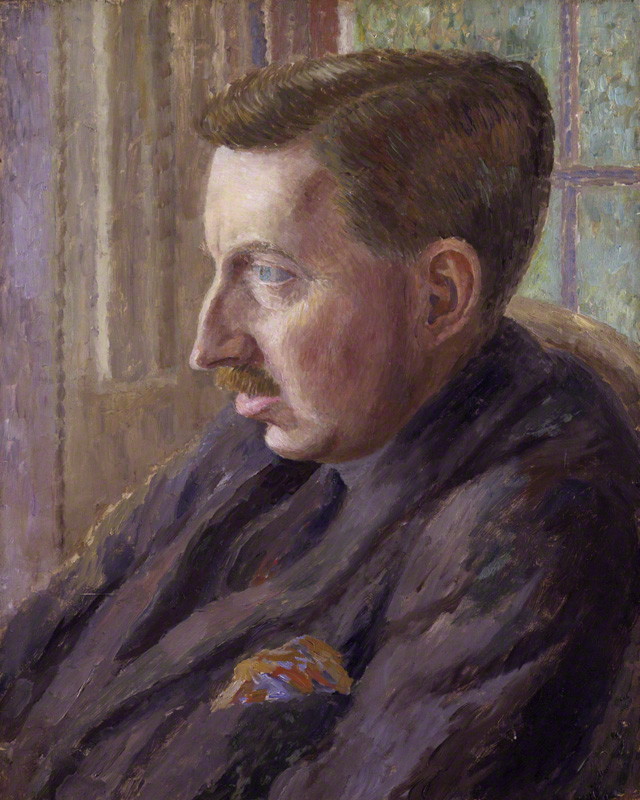
Edward Morgan Forster lived most of his life in England, but traveled extensively during the 1910s and 20s, mainly in Egypt and India. He is probably best known today for the one novel he wrote about India, A Passage to India, though at the time this novel was considered somewhat of a departure from his earlier, widely successful novels based in England itself, including A Room With a View, Howards End, and Where Angels Fear to Tread.
As a participant in the Cambridge-originated Bloomsbury movement, Forster was close to many of the movers and shakers in the British modernist literary scene, though his novels have been considered somewhat traditional in comparison to those of Woolf or Joyce. It might also be important to note that Forster was gay – though he was never ‘out’ during his lifetime. Some scholars have in recent years, looked for homosexual themes in Forster’s works, including A Passage to India. These are debatable, but even if we decide not to focus on that aspect of his biography, it does seem clear that Forster’s strong emotional attachment to Egyptian and Indian men he knew probably made a difference in how well he portrayed those societies in his fiction.
Forster's A Passage to India is based on Forster’s two trips to India, one of which occurred in 1912, and the second of which occurred in 1921-1922. The second trip was longer and more meaningful, and probably gave Forster much of the material that makes up A Passage to India. He had a number of Indian friends, including one, Syed Ross Masood, to whom the novel is dedicated. Through his conversations with Indians -- mostly men -- Forster gained a good sense of what young Indians were interested in, and how they felt about the British at the time. Their critique of the injustices of British colonialism had reached a new level of articulation, in part because of the recent memory of the Khilafat movement and the rise of the Gandhian Swaraj movement in the late 1910s. The fictional town in the novel, Chandrapore, is based on a British-built suburb of Patna called Bankipur; the Marabar Caves in the text closely resemble the Barabar Caves north of Gaya (about four hours from Patna by car).
Under U.S. copyright law, A Passage to India is in the public domain as of January 1 2020. This edition was produced and edited by Amardeep Singh at Lehigh University (amsp@lehigh.edu).
Contents of this path:
- Chapter I
- Chapter II
- Chapter III
- Chapter IV
- Chapter V
- Chapter VI
- Chapter VII
- Chapter VIII
- Chapter IX
- Chapter X
- Chapter XI
- Chapter XII
- Chapter XIII
- Chapter XIV
- Chapter XV
- Chapter XVI
- Chapter XVII
- Chapter XVIII
- Chapter XIX
- Chapter XX
- Chapter XXI
- Chapter XXII
- Chapter XXIII
- Chapter XXIV
- Chapter XXV
- Chapter XXVI
- Chapter XXVII
- Chapter XXVIII
- Chapter XXIX
- Chapter XXX